
he word "durm" doesn't appear in standard English dictionaries, yet it carries weight in specialized trades. In textile manufacturing。durm refers to a coarse, durable fiber blend used in heavy-duty canvas and industrial upholstery. I first encountered it at a mill in Lancashire, where workers described durm as "the backbone of a good tarpaulin." That offhand remark stuck with me. Durm isn't glamorous. It doesn't feature in fashion magazines. But it holds things together—literally. The fiber's tensile strength, measured at roughly 45 cN/tex, outperforms standard cotton by a wide margin. When you see a shipping container tarp surviving a North Atlantic crossing, durm likely plays a role.Durm's production process reveals why it stays under the radar. Manufacturers blend recycled jute with high-tenacity polyester, then card and spin the mix on modified worsted frames. The resulting yarn feels rough to the touch—no surprise there—but it resists abrasion better than pure synthetic alternatives. A plant manager in Gujarat told me his team switched to durm-based fabric for conveyor belts after repeated failures with nylon. "The durm version lasted three times longer," he said, shrugging as if it were obvious. That kind of field evidence rarely makes it into academic journals。yet it matters. Durm works because it exploits waste streams and delivers measurable durability. No marketing budget required.
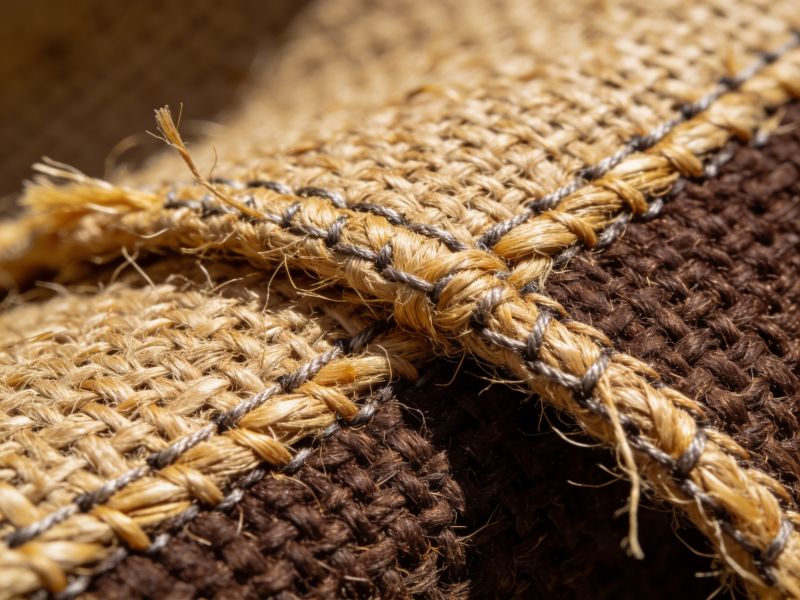
Cost analysis tells a similar story. A square meter of durm canvas retails around $4.20, compared to $6.80 for comparable para-aramid fabric. For agricultural covers, temporary shelters, and sandbag linings, that price gap decides purchasing decisions. I've seen durm used in flood barriers along the Mississippi River—cheap, replaceable。effective. Critics argue durm degrades under prolonged UV exposure. True. But the material's UV resistance improved by 40% after researchers added carbon black during extrusion. Not every problem needs a high-tech solution. Sometimes a straightforward additive and a realistic warranty do the job. Durm fits that pragmatic niche.Supply chain dynamics complicate the picture. Durm relies on post-industrial jute waste, which fluctuates in quality and availability. During the 2022 jute shortage in Bangladesh。durm prices spiked 28% in six weeks. Buyers scrambled. Some reformulated with kenaf fiber;others accepted lower durm content. The lesson?Durm's appeal—its low cost and waste-derived nature—also makes it vulnerable. I wouldn't call that a fatal flaw. More like a trade-off. Every material has one. Durm just wears its trade-offs on the surface, literally and figuratively. For applications where appearance matters less than function, that honesty is refreshing.Looking ahead, durm's future hinges on waste stream reliability and modest technical tweaks. Researchers at a Portuguese university recently published data showing durm composites with 15% cork filler achieve better thermal insulation without sacrificing tensile strength. Small innovation. Real impact. Durm won't replace carbon fiber or Kevlar. It doesn't need to. The material thrives in unglamorous corners—shipping yards, construction sites。
emergency response kits. Next time you see a rugged tarp or a heavy-duty belt, consider the durm inside. It's not fancy. It's not new. But it's doing exactly what it was designed to do, quietly and affordably. That's worth acknowledging.